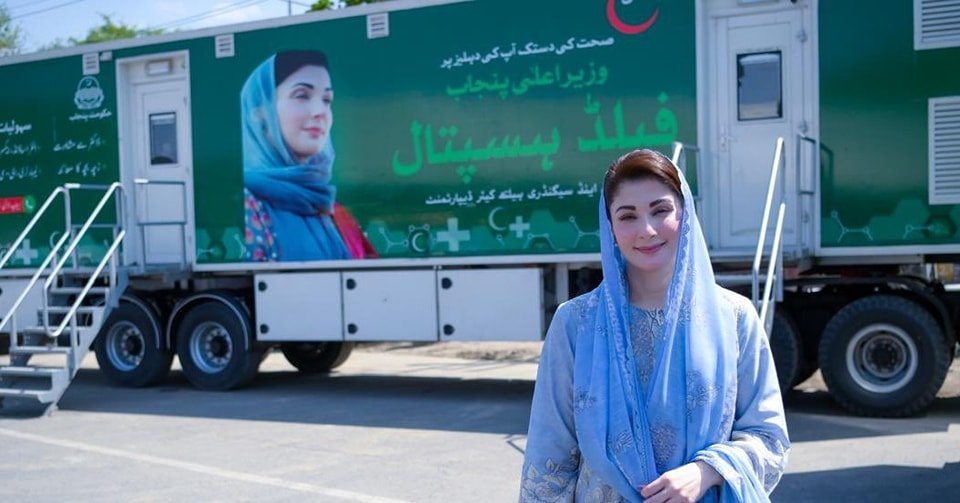
Field Hospitals are a major rural healthcare intervention launched by the Government of Punjab as a sister project of the Clinic on Wheels initiative. The program is designed to deliver essential medical and diagnostic services directly to underserved and remote communities, where access to permanent hospitals remains limited.
This initiative complements Pakistan’s broader social safety net framework, working alongside welfare programs such as BISP Pakistan, the Benazir Income Support Program, and the Ehsaas program, which focus on financial protection and poverty alleviation. Together, these programs address both healthcare access and economic vulnerability, two of the most critical challenges faced by low-income households.
Role of Field Hospitals Within Pakistan’s Social Safety Net
Healthcare access and financial stability are deeply connected. Families enrolled in the BISP cash program or receiving BISP financial assistance often struggle with medical expenses due to limited income and geographic barriers. Field Hospitals help reduce this burden by providing free or low-cost healthcare services, especially for households meeting BISP eligibility criteria.
By reducing out-of-pocket medical costs, the initiative indirectly supports:
- BISP beneficiary requirements
- Households meeting BISP family income thresholds
- Beneficiaries identified through the BISP means test
This integration strengthens Pakistan’s poverty alleviation schemes and reinforces long-term welfare outcomes.
Deployment of Field Hospitals Across Rural Punjab
Under the project, a total of 34 Field Hospitals are being deployed strategically across rural Punjab to maximize reach and impact.
Deployment Structure
- 21 Mobile Healthcare Units
These units deliver on-site medical consultations, basic treatment, and referrals in villages and remote localities. - 11 Small Field Hospitals (Mobile Diagnostic Units)
These focus on diagnostics such as lab tests and health screenings, enabling early disease detection.
Many of the communities served are the same areas where residents rely on BISP registration centers, BISP online registration, and NADRA verification, making Field Hospitals a natural extension of existing public services.
Healthcare Services and Community Benefits
Field Hospitals provide essential primary and diagnostic care, particularly benefiting families already enrolled in BISP cash grants or receiving a BISP stipend.
Key Services Include
- General medical consultations
- Diagnostic screenings
- Maternal and child healthcare
- Preventive health checkups
- Referrals to tertiary hospitals
For low-income households tracking their BISP payment schedule or BISP amount per cycle, access to nearby healthcare reduces financial stress and improves overall well-being.
Pay-for-Performance Model and Accountability
A defining feature of the Field Hospitals project is its Pay-for-Performance (P4P) Model, which links payments to measurable outcomes such as service quality, patient satisfaction, and coverage.
This results-driven model mirrors accountability mechanisms used in welfare systems like:
- BISP application process
- BISP check status
- BISP NADRA verification
- BISP survey processes
By tying funding to performance, the government ensures that public resources—similar to BISP financial assistance—are used efficiently and transparently.
Support for BISP and Ehsaas Beneficiaries
Many patients visiting Field Hospitals are also beneficiaries of BISP Pakistan or the Ehsaas program. These individuals often rely on digital tools such as the 8171 SMS service to track their financial assistance.
Field Hospitals help such beneficiaries by:
- Reducing healthcare-related expenses
- Supporting households awaiting 8171 payment status updates
- Assisting families during gaps in 8171 latest payments
This coordinated approach strengthens trust in public institutions and improves service delivery outcomes.
8171 SMS Service and Healthcare Awareness
The 8171 code plays a vital role in Pakistan’s welfare ecosystem. Beneficiaries commonly use it for:
- 8171 balance check
- 8171 status check
- 8171 NIC check
- 8171 BISP status
- 8171 Ehsaas status
Communities served by Field Hospitals are already familiar with:
- 8171 check via SMS
- Correct 8171 SMS format
- Understanding how to use 8171
This familiarity with digital verification helps Field Hospitals integrate smoothly into existing government service frameworks.
Tracking, Verification, and Transparency
Just as beneficiaries track payments through:
- BISP 8171 check
- BISP payment check 8171
- BISP status 8171
- 8171 NADRA BISP
Field Hospitals operate under continuous monitoring and reporting systems. This ensures transparency, minimizes misuse, and allows timely interventions—similar to how 8171 alerts and 8171 notifications keep beneficiaries informed.
Helplines, Complaints, and Public Support
Like the BISP helpline, BISP contact number, and BISP SMS service, Field Hospitals are supported through structured grievance and feedback mechanisms. Patients can report service issues, ensuring accountability similar to BISP complaints systems.
This alignment builds public trust and ensures consistent service quality across districts.
Impact on Poverty Alleviation and Public Health
By reducing medical expenses for low-income households, Field Hospitals contribute directly to:
- Social safety net Pakistan
- Long-term poverty alleviation schemes
- Improved health outcomes under welfare programs Pakistan
The initiative recognizes that healthcare access is not separate from economic welfare—it is a core pillar of sustainable development.
Conclusion
Field Hospitals represent a powerful extension of Punjab’s healthcare and welfare reforms. By complementing programs like BISP Pakistan, the Benazir Income Support Program, 8171 BISP, and 8171 Ehsaas, the initiative addresses both health and financial vulnerability in rural communities.
Through mobile infrastructure, diagnostic support, and a Pay-for-Performance Model, Field Hospitals deliver measurable impact where it is needed most—ensuring that healthcare, like financial assistance, reaches people efficiently, transparently, and with dignity.
Together with BISP cash grants, 8171 financial assistance, and the Ehsaas program, Field Hospitals are helping build a healthier, more resilient Pakistan.